Irrigation Interests Threaten Precious Hoopa Tribal Fisheries
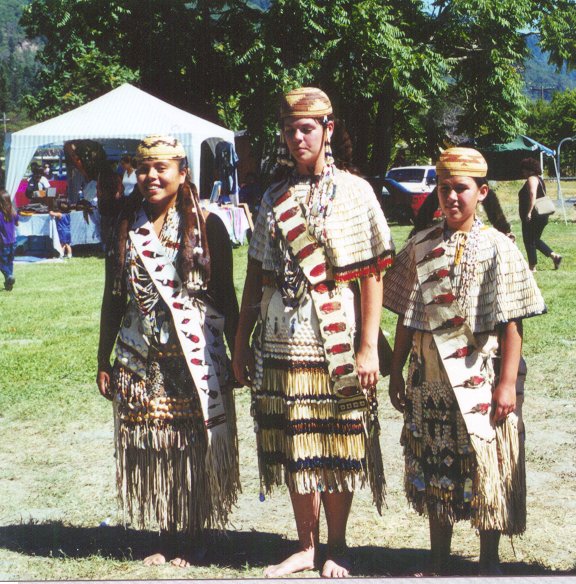
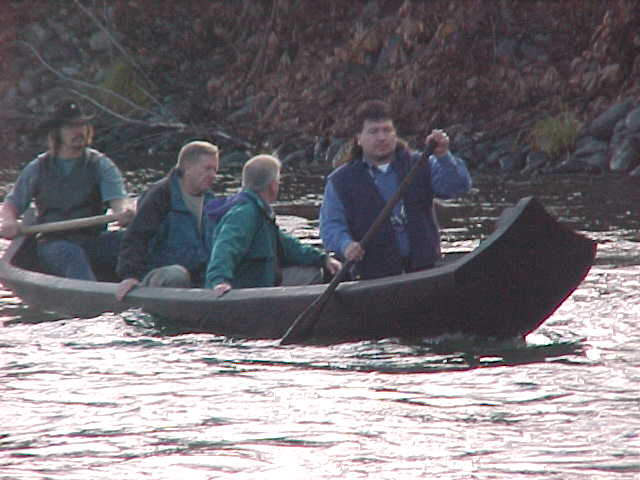
Since time immemorial, the Trinity River of Northwest California has been the life blood of Hoopa Indian culture and subsistence. The Trinity is the largest tributary of the mighty Klamath River and it joins the Klamath about 45 miles from the Pacific Ocean. Preserving the fish and other aquatic life of those rivers is a constant struggle for the Hoopa Valley Indian Tribe. This page provides a summary and links to documents describing the tribe’s struggle to protect these resources.
1. The Battle to Restore the Trinity. In 1963, the Trinity River was dammed by the U.S. Interior Department and “surplus” water began to be pumped over to the Sacramento River from Lewiston, California, near Weaverville, in Trinity County. The 1955 law that authorized the dam prohibited excess water diversions because of the injuries that could cause to fish and people downstream along the Trinity River. Even in 1955, Congress knew that fish do poorly without water.
After 37 years of neglect of the Secretary’s duty to take “appropriate measures to ensure the preservation and propagation of fish and wildlife,” 69 Stat. 719, Congress grew impatient with the slow pace of fish protection efforts and in 1992 enacted Section 3406 (b)(23) of the Central Valley Project Improvement Act, Pub. L. 102-575. This new law was passed “to meet Federal trust responsibilities to protect the fishery resources of the Hoopa Valley Tribe.” In it, Congress ordered completion of the ongoing Fishery Flow Evaluation Study (large file) and implementation of its conclusions; it also set a minimum amount of 340,000 acre-feet to be allowed to flow down the Trinity River. This amount is equivalent to the third-lowest unregulated flow in the river.
On December 19, 2000, Interior Secretary Bruce Babbitt traveled to Hoopa California, where he and the Tribal Chairman signed a Record of Decision setting forth the plan for Trinity River restoration. The heart of that plan is increasing the water left in (released to) the Trinity River. The ROD also provided for a detailed Implementation Plan. The amount of water released to the River depends on the “water year type” (wet, dry, normal, etc.). The ROD also allows more than half of the Trinity’s flow at Lewiston to continue to be exported through tunnels into the Sacramento Valley.
Even before the Record of Decision (“ROD”) was signed, Westlands Water District, a huge San Joaquin Valley irrigation entity, sued to block Trinity River restoration. While the Westlands case delayed restoration for some time, the courts eventually sided with the Hoopa Valley Tribe, allowed increased water releases to the river and directed the Interior Department to carry out other restoration work.
In the first four years after the ROD was signed in 2000, water releases to the Trinity River were set by the federal courts. In 2001, District Court Judge Oliver Wanger ruled that the Interior Department must prepare a new Environmental Impact Statement on the restoration work effect, but he permitted the critically dry water amount, 369,000 acre-feet, to be released, which was appropriate under the ROD for that very dry year. In early 2002, the Hoopa Valley Tribe filed a motion to modify the preliminary injunction and the Court authorized release of 468,600 acre-feet of water to the Trinity River.
On December 10, 2002, Judge Wanger issued a Memorandum Decision and Order ruling that the Interior Department violated two environmental laws when it issued the 2000 ROD and directing that a revised Environmental Impact Statement be prepared. The Tribe appealed. In 2003, the Court authorized the Department to release 453,000 acre-feet of water for the Trinity River, plus use an additional 50,000 acre-feet if necessary for late summer conditions. In 2004, the Ninth Circuit Court of Appeals granted the Hoopa Valley Tribe’s request to use 647,000 af (the normal year volume) for water releases to the Trinity River.
In June 2004, Interior requested additional time to complete the Supplemental Environmental Impact Statement for Trinity River restoration. The Court granted that request and extended the time for completion of the SEIS. The District Court’s docket sheets show the details of the continuing litigation. The SEIS is available for review here.
On July 13, 2004, the Ninth Circuit Court of Appeals reversed all but one of Judge Wanger’s rulings. The court held that no SEIS is needed. The purpose and need statement and the range of alternatives examined in the 2000 FEIS were adequate. The use of power plant bypasses for temperature control was fully examined. The ROD’s effect on California’s energy reliability was insignificant and did not require supplementation. The court upheld the ruling that Fish and Wildlife’s Biological Opinion RPM which limited movement of the X2 point in the Bay Delta and NMFS’ RPM which required immediate implementation of ROD flows were invalid because they required major changes in the proposed restoration action. Those RPM are unenforceable, but the Biological Opinions are otherwise valid.
Westlands and NCPA petitioned for panel rehearing and rehearing en banc but, on November 5, 2004, the Ninth Circuit Court of Appeals rejected both petitions. The court noted that no judge requested a vote on the petitions for en banc review. No party petitioned for Supreme Court review, so the Ninth Circuit’s 2004 ruling is the law of the land.
While the Ninth Circuit ruled that “nothing remains to prevent the full implementation of the ROD, including its complete flow plan for the Trinity River,” the ROD’s success depends on restoration work in the Trinity watershed as well as flows. The ROD permits the Bureau of Reclamation’s Trinity River Division to export of over 50% of the Trinity flow at Lewiston, CA to the Central Valley, so successful restoration using the remaining water requires intensive habitat restoration work. Within the first three years after the ROD, the Trinity Management Council was to complete bank restoration work at 24 sites below Lewiston Dam. They actually completed zero. In 2004, the TMC appointed a subcommittee to examine its lack of progress and got a scathing report. Instead of rectifying the faults, Reclamation proposed to cut the fiscal year 2005 funds for restoration.
In 2005-08, the pattern of under-funding restoration work has continued. The Hoopa Valley Tribe and others have been assisted by Sen. Dianne Feinstein and Congressman Mike Thompson in adding funds to the inadequate amounts requested by the Bush Administration. In 2007, Congressman Thompson introduced H.R. 2733, a bill to assure that the funding promised in the ROD would be provided. The Bureau of Reclamation and its Central Valley agribusiness allies opposed the bill, and it failed. Lacking adequate funds, and hampered by Reclamation interference, the TMC has failed to restore key river sites, such as Vitzhum Gulch, to meet their potential. Thus, continuing problems of inadequate funding and poor restoration performance are of great concern to the Hoopa Valley Tribe and are the subject of continuing negotiations and discussions.
2. 2002--Largest Recorded Die-Off of Adult Salmon in the Klamath. Meanwhile, the Klamath River portion of the Trinity River fish migration path has become increasingly hazardous. In 1993, the Interior Department Solicitor ruled that when the United States set aside what are now the Hoopa Valley and Yurok Indian Reservations, it reserved for the Indians a federally protected right to sufficient fish to support a moderate standard of living. Implementation of that ruling was unsuccessfully challenged in Parravano v. Babbitt. The court upheld the Indian fishing right and the Supreme Court denied review in 1996.
The Klamath River, one of the largest rivers of the West Coast, has historically been a huge producer of salmon for ocean, tribal and recreational fishermen. Until recent years, salmon and steelhead returns to the main stem Klamath and its tributaries above the Trinity exceeded those returning to the Trinity itself. No more. The Bureau of Reclamation’s construction of the Klamath Irrigation Project near Klamath Falls, Oregon, and the subsequent construction of fish-blocking dams on the Klamath between there and Interstate 5 in California, spelled the demise of most main stem fish resources. Nevertheless, in 1995 and again in 1997, the Interior Department Solicitors ruled that the Bureau of Reclamation’s Klamath Irrigation Project (upstream of the Indian reservations) must ensure that its operations not interfere with the tribes’ rights to water for fishery purposes. However, the Bureau of Reclamation has not followed that direction.
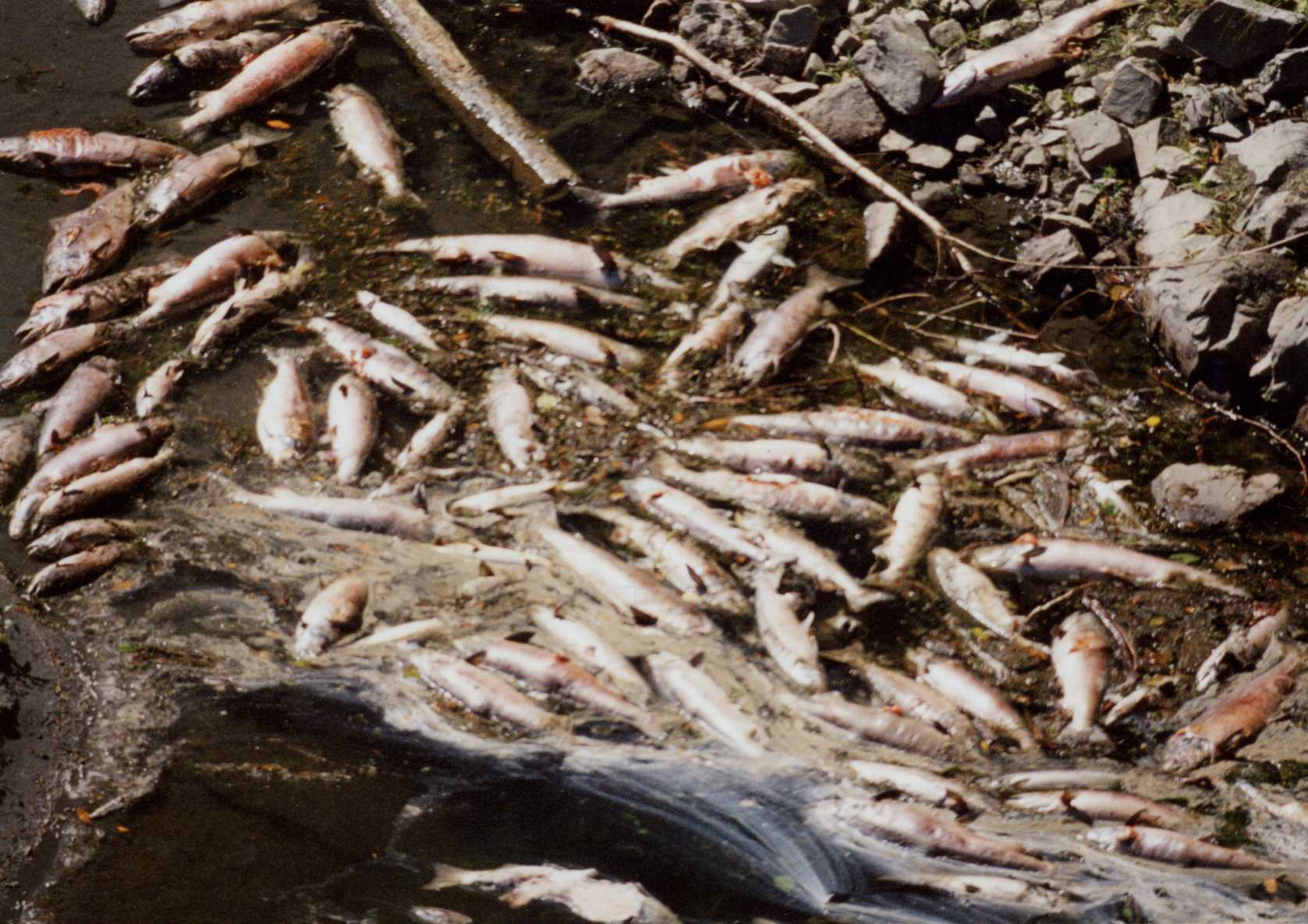
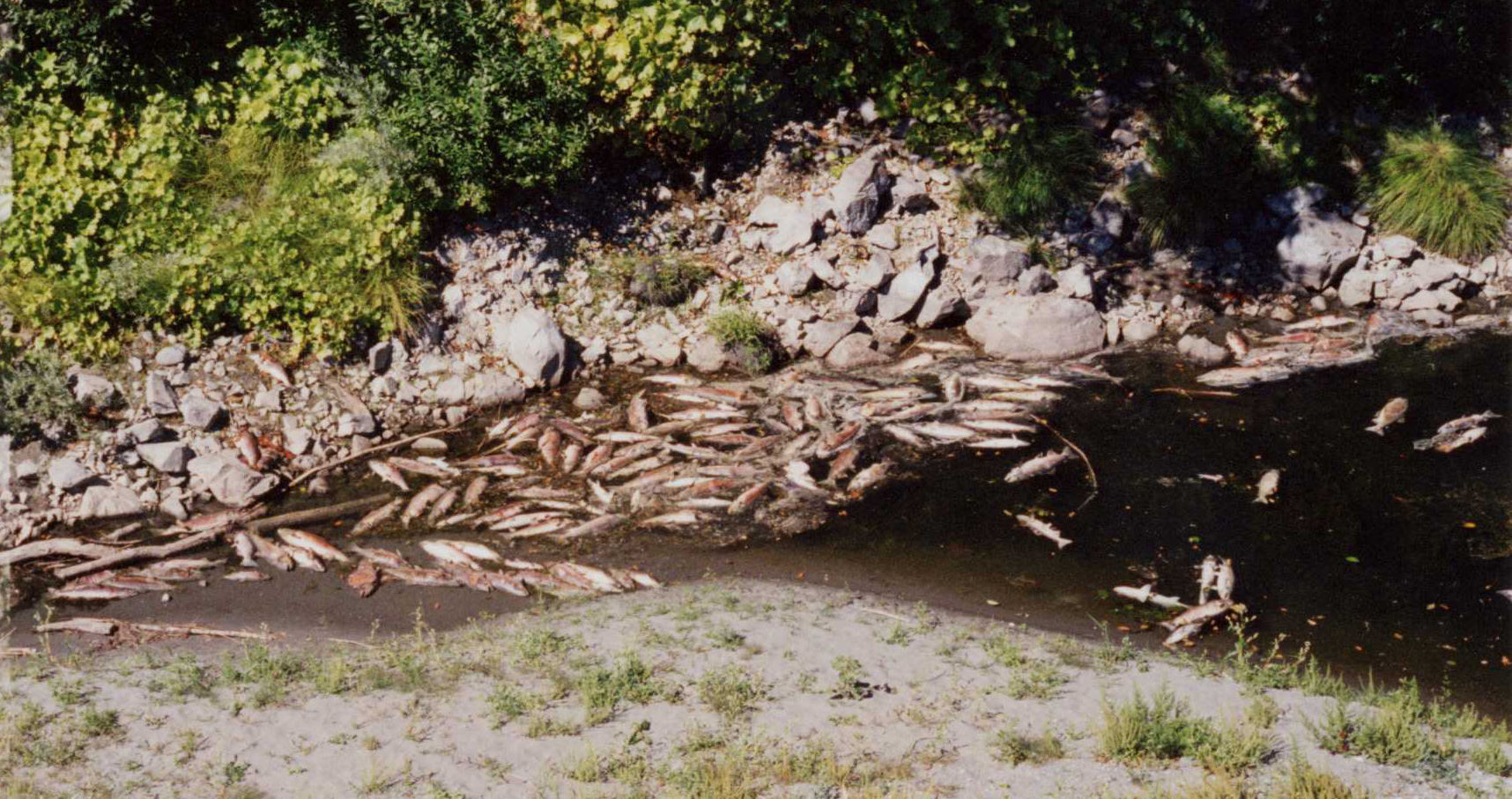
In 2002, between 34,000 and 68,000 adult Chinook salmon died in the Lower Klamath River below the confluence with the Trinity. Analysis showed that most of those fish would have returned to the Trinity River but for the reduced flow of bacteria-laden water they met downstream. As a result, the Hoopa Valley Tribe intervened as a plaintiff in a suit by the Pacific Coast Federation of Fishermen’s Association against the federal agencies controlling Klamath River water releases. On July 14, 2003, Judge Armstrong ruled that the agencies had violated the Endangered Species Act by denying water to fish and assuming that others would provide enough water for Coho salmon to survive. (The agencies permitted water to be withdrawn from the Upper Klamath for irrigation purposes.)
On October 18, 2005, the Ninth Circuit Court of Appeals affirmed the PCFFA ruling, noting that the agencies disregarded the life cycle of the species. The Court said, “all the water in the world in 2010 and 2011 will not protect the Coho, for there will be none [then] to protect.” On remand, Judge Armstrong issued an injunction directing the Bureau of Reclamation to limit irrigation water diversions if they would cause the river to fall below 100% of the long-term flows required by the 2002 Biological Opinion to protect salmon.
In 2003, Judge Armstrong also ruled that a trial would be necessary to determine if the federal agencies violated trust obligations owed to the Hoopa Valley and Yurok Tribes by killing the returning fish. Michael Kelly, the lead biologist for National Marine Fisheries Service, had resigned in protest because of Reclamation’s interference with the 2002 Biological Opinion preparation, interference which led to the low water flows permitted that year by the BiOp (flows that the Judge later enjoined.) Nevertheless, scientific analysis of the 2002 fish die-off pointed to several causes besides the unnaturally low water flows, so the extent of culpability of the Bureau of Reclamation was unclear. As a result, the Hoopa Valley Tribe and the federal defendants entered into a settlement in October 2004 under which a technical consultation group will be created and crucial fisheries studies will be funded for a few years. The Yurok Tribe did not settle its claim but it was dismissed before trial on jurisdictional grounds. The Tribe’s appeal of that dismissal was settled in 2006.
3. Remove Klamath Dams to Restore Fish! In 2006, the 50-year federal license to operate six dams blocking the Klamath River expired. The Hoopa Valley, Klamath, Karuk and Yurok Tribes have all intervened in proceedings before the Federal Energy Regulatory Commission (FERC), P-2082, regarding whether and how that license should be reissued to the electric utility, PacifiCorp.
Several of the fish-blocking dams of the Klamath were built before the Federal Power Act was passed in 1920. While they generate little electricity, they also have few operating costs so they are popular with the utility. However, many new laws protecting the environment and tribal fisheries have been passed since the Klamath Project license issued in 1956 and no new license can be issued to the Project without satisfying current laws.
In March, 2006, the Interior Department and National Marine Fisheries Service issued federal land protection conditions and fish passage “prescriptions” as authorized by sections 4(e) and 18 of the Federal Power Act for the dams. (The three dams in the California portion of the Klamath River have no fish ladders or screens whatsoever!) These called for full volitional upstream and downstream fish passage. There are, of course, currently no salmon runs above Iron Gate Dam, the lowest structure in the Klamath Hydroelectric Project, since no fish passage was constructed when Iron Gate was built in 1961. See Cal. Ore. Power Co. 25 F.P.C. 579 (Mar. 27, 1961). PacifiCorp responded by invoking a new federal law, the Energy Policy Act of 2005, and demanding a hearing on disputed parts of those conditions and prescriptions, challenging the federal agencies’ authority. Orders, briefs and transcripts of that hearing are outlined and linked here. At the conclusion of a week of trial, in 2007 Judge McKenna upheld substantially all of the fish and water protection measures.
In November 2006, the California Energy Commission in cooperation with the Department of the Interior released a report on Klamath dam decommissioning costs, Economic Modeling of Relicensing and Decommissioning Options for the Klamath Basin Hydroelectric Project. PacifiCorp responded to the Report by retaining Christensen Associates Energy Consulting, LLC (“CAEC”) to review the Report. CAEC contended that it found several flaws and argued that, with their corrections to the CEC Report, relicensing the Klamath Hydro Project would cost $46 million less than decommissioning. The CEC replied by issuing an addendum to its original report. The CEC insists that relicensing, including mitigation costs, creates the highest costs and risk for PacifiCorp rate payers. Id. The CEC Report has been subsequently reinforced by the Federal Energy Regulatory Commission Environmental Impact Study conclusions.
The FERC relicensing proceeding reached a plateau in November 2007 with issuance of the Final Environmental Impact Statement for Hydropower License, FERC/FEIS-0201F. The FEIS examined PacifiCorp’s application with the Commission for a new license for the Klamath Hydroelectric Project, which is located principally on the Klamath River in Klamath County, Oregon and Siskiyou County, California, between Klamath Falls, Oregon and Yreka, California. The Klamath Project has a capacity rating of 169 megawatts (MW), about 2% of PacifiCorp’s total capacity, and it generates about 1% (716,800 MWh) of PacifiCorp’s average electricity production. The current license expired on March 1, 2006, and the Project is operating under automatically-issued annual licenses.
The Executive Summary of the FEIS shows the possibility of retiring the Copco No. 1 and Iron Gate Dams, as well as retirement of J.C. Boyle, Copco I, Copco II and Iron Gate developments. Table ES-1, summarizes the effects of various alternatives, showing that complying with the mandatory fishway conditions produces a net annual loss of $20.2 million, retirement of Copco I and Iron Gate Dams would produce a net annual loss of $6.6 million benefit; and retirement of all the dams, a net annual loss of $13.2 million.
4. Hijacking Dam Removal Negotiations to Aid the KBRA. The deeply negative economic “benefits” of relicensing the Hydroelectric Project while complying with the Clean Water Act, the Endangered Species Act, and Indian fishing rights, created an opportunity for the parties to negotiate concerning retirement and removal of some or all of the dams. Unfortunately, under the pro-agribusiness Bush Administration, this fit nicely into the Bureau of Reclamation’s and irrigation interests’ (led by the Klamath Water Users Association) plan to establish priority for their water rights over those of the Indian Tribes in Oregon and downstream in California. (The tribes currently have senior, and thus priority, water rights.) What has followed is a long series of negotiation sessions, at first presided over by the Interior Department’s representatives, but later by a mediator hired by the Department.
On January 15, 2008, approximately 20 negotiating parties (not including the dam licensee, PacifiCorp) released Draft 11 of the Proposed Klamath River Basin Restoration Agreement for the Sustainability of Public and Trust Resources and Affected Communities (“KBRA”). That partial agreement proved both incomplete and highly controversial. It was incomplete because it depended for its effectiveness upon completion of a Klamath Hydroelectric Project Settlement Agreement, a document which did not then exist (see below).
The proposed KBRA was controversial because it guaranteed water to irrigation and refuge users but did not guarantee water for Upper Klamath Lake or instream flow of the Klamath River downstream of the irrigation project. Analysis of the water flows projected below the irrigation diversions showed that despite enlargement of Upper Klamath Lake and some planned water efficiencies in the Upper Basin, in approximately 40% of water year types, the river levels would not satisfy the flows required by the National Marine Fisheries Service’s Biological Opinion regarding the Bureau of Reclamation’s Klamath Project operations from June 1, 2002, through March 31, 2012. Table 9 of that document (BiOp at 70) prescribes the recommended long-term Iron Gate Dam discharge levels by water year type, a set of requirements made mandatory by Pacific Coast Federation of Fishermen’s Ass’n v. U.S. Bureau of Reclamation, U.S.D.C. N. Cal. No. C-02-2006 SBA, Order Granting Motion for Injunctive Relief following Remand (Mar. 27, 2006). Thus, the proposed KBRA will frequently fail to meet the needs of fish.
The proposed KBRA also called for federal appropriations of $985 million and confers many benefits on Klamath Project irrigators including $41 million in power subsidies; $92.5 million to implement their own water plan that they develop without public oversight; preferential Columbia River hydro-system power rates; debt forgiveness on disputed Klamath Project capital costs owed to the United States; special contracts on project operation, maintenance and pumping costs that need legislative exemptions from the cost sharing provision of the Reclamation Reform Act of 1982; support for continuing commercial leaseland farming on national wildlife refuges for 50 years; 80% of the revenue paid for farming refuge lands goes back to their benefit by payments of 10% of the revenue to Tulelake Irrigation District, 10% of the revenue to Klamath Drainage District, and approximately 60% to the Bureau of Reclamation to reduce capital costs of the Klamath Project that would otherwise be recoverable from the Project irrigators; U.S. Fish & Wildlife Service picking up a greater percentage of the pumping costs for operating the D plant that drains Tule Lake for farming; Reclamation assuming all costs for operating Link River Dam and Keno Dam for Project diversion, a substantial portion of which costs should be paid by Project irrigators under current cost-sharing laws; and finally regulatory assurance benefits, intended to shield activities from the Endangered Species Act. As explained below, the misguided KBRA ultimately expired.
On November 13, 2008, Interior Secretary Dirk Kempthorne announced an Agreement in Principle with PacifiCorp concerning its obsolete dams. The Agreement in Principle (“AIP”) defines “a path forward” from which there are many exits for the utility. Each exit (i.e., right to withdraw from the Agreement) ends the non-binding plan for removing four dams and restarts the FERC licensing process. Under the AIP, no decision whether to remove a dam can be made before March 31, 2012, at the earliest. Thus the main effect of the AIP now is to halt and delay the water quality certification analysis (required by the Clean Water Act) which was underway in California and Oregon, and suspend the FERC relicensing process.
The AIP envisioned negotiation toward a Final Agreement (the Klamath Hydroelectric Settlement Agreement) in late 2009. The affected Indian tribes were not parties to the AIP and were permitted to observe the subsequent negotiations only if they accepted the AIP as the basis of negotiations and refrained from seeking “to reopen resolved” issues. Enactment of federal legislation is a condition of the “path forward;” it must ratify a separate agreement, the Klamath Basin Restoration Agreement (“KBRA”), authorize the United States to conduct studies, and direct the United States to make a determination, by March 31, 2012, of whether the benefits of dam removal justify the potential costs, risks, liabilities, etc. § 3, p. 6. The states of Oregon and California may exercise a right of withdrawal within sixty days if they disagree with the United States’ 2012 determination.
As envisioned in the AIP, in the interim until approximately 2021, the licensing process and water quality evaluations would be stalled, and the Project will continue generating power without necessary conditions to protect fish health, habitat, or water quality. The AIP also required Oregon and California each to secure by legislation a total state contribution toward dam removal of $200 million from power customer rate increases. In addition, the State of California must obtain voter approval of a general obligation bond for an additional $250 million for dam removal. Failure of any of these pieces of legislation will end the Agreement.
The federal legislation required by the AIP will direct the United States to designate a dam removal entity, which must be a non-federal entity qualified to remove the dams, defend any litigation, pay all damages, and provide complete protection from liability for PacifiCorp. § 4, p. 7, § VIII, p. 15. Having a non-federal entity perform these functions, if a qualified entity can be found, will lead to higher insurance and defense costs than if the federal government took the responsibility.
Under the AIP, PacifiCorp would operate the dams pursuant to the annual extensions of its 1956 license until decommissioning of each individual dam, which would begin, at the earliest, in 2020. Interim conditions on operations may be included in the Final Agreement to be negotiated. Also, PacifiCorp, the National Marine Fisheries Service and U.S. Fish and Wildlife Service have approved an Interim Conservation Plan (a subset of the minimal interim measures mentioned in the AIP) which will be added to PacifiCorp’s annual license. The Interim Conservation Plan utterly fails to meaningfully address the significant threats to fish health and water quality that plague the river.
On September 30, 2009, PacifiCorp and other parties reached a tentative Klamath Hydroelectric Settlement Agreement, (“KHSA”) prepared along the lines of the Agreement in Principle. As with the AIP, performance of this agreement required separate federal and state legislation to be passed, and it ensured that PacifiCorp could continue to operate the ancient hydroelectric project for many years to come. The KHSA blocked the FERC relicensing proceeding by requiring Oregon and California to hold up the certification process required by Se. 401 of the Clean Water Act. Instead, the KHSA prescribed a planning process which might, but might not, result in removal of some or all of the dams that block Klamath River fish. A slightly modified version of the KHSA was released for public review on January 8, 2010.
Also on January 8, 2010, the parties released a new version of the KBRA, discussed above. The KBRA, although revised from the January 15, 2008 version, continued to have the following short-comings: (1) No guaranteed river flows for fish; (2) Required non-federal parties' support of continued leased-land farming on National Wildlife Refuges for at least 50 more years, creating a political gridlock for progress; (3) Provided more water for irrigators than is currently allowed under the existing BiOp/ESA; (4) Required non-federal parties to support changing the Biological Opinion protecting Coho salmon to enable the irrigators to divert desired water; (5) Provided nearly $50 million in subsidies for irrigators; (6) Does not have a ready drought or climate change plan; (7) Limits the water rights of all Klamath basin tribes without all tribes' consent.
On February 18, 2010, slightly revised versions of both the KBRA and the KHSA were signed by many parties. A law review article, “Dewatering Trust Responsibility: The New Klamath River Hydroelectric and Restoration Agreements,” explains the agreements more fully. Federal agencies did not sign the KBRA because of the need for new legislative authority. On March 9, 2010, the parties released draft federal legislation which, among other things, would terminate federal trust responsibilities to non-signatory tribes in the Klamath River Basin (sec. 109(g)), and also request $991.7 million (sec. 106). In 2010, no congressman agreed to introduce that legislation.
On March 15, 2010, critically low water levels in Upper Klamath Lake prompted the resurrection of a revised biological opinion from the National Marine Fisheries Service that prioritizes water deliveries to the Klamath Irrigation Project, and placed river flows for fish last on the list. “This is exactly what happened in 2002. The result—the largest die-off of adult salmon in history,” Hoopa Valley Tribal Self Governance Coordinator, Daniel Jordan said. “NMFS has the opportunity and responsibility not only to protect Coho salmon survival, but recovery as well. Instead they’ve chosen to create loopholes in the science to help the Bureau of Reclamation provide agricultural water deliveries—at the expense of fish.”
In 2009, Upper Klamath Lake was drained down to the minimum level allowed by the biological opinion. There was not enough rain and snow this year to refill the reservoir. Those two factors threatened agricultural deliveries that season. “They draw down the lake to deficit levels then calculate the water year type based on filling that deficit, plus the amount of rain and snow received,” Jordan said. “What they’re doing is creating an artificial drought for the river, while still delivering water to the Klamath Irrigation Project.” Currently there is no mechanism in place to prevent this from happening year after year.
Jordan cites Section 21 of the KBRA, which allowed the Federal agencies to modify the ESA requirements to accommodate the KBRA deal. “They did what they said they would not do--cooked the books on the application of the Endangered Species Act (ESA). And, the KBRA provided the opportunity to do it,” Jordan said. “The KBRA hasn’t gone into effect, yet we are already witnessing, first-hand, the parties’ commitment to deliver water to the Project at the expense of the fishery.”
As a result of the new federal biological opinion, Jordan expects the Hoopa Valley Tribe more aggressively to push for protections of Trinity River fish in the Klamath River, fish that the Trinity River Restoration Program is intended to restore. The Hoopa Valley Tribe is especially concerned that Lower Klamath River fishing will begin to deplete Trinity salmon stocks as Klamath salmon production begins to decrease.
On June 14, 2010, the Bureau of Reclamation announced its intent to prepare an Environmental Impact Statement evaluating removal of four dams on the Klamath River. The notice scheduled “scoping” hearings around the Basin during the month of July and invited comments. The Hoopa Valley Tribe’s comments urge Reclamation to evaluate a broad range of alternatives to restore salmon. A Final EIS was published in April, 2013 but the Interior Secretary was barred from choosing the dam removal (or any other) alternative by provisions in the KHSA which required that Congress pass new legislation to authorize that decision.
5. Demise of the KBRA and acceptance of Hoopa’s dam removal solution. In 2011, two bills were introduced in Congress to ratify the expensive and dangerous path defined by the KBRA and the KHSA parties. Representative Mike Thompson introduced H.R. 3398, the Klamath Basin Economic Restoration Act of 2011, on November 10, 2011. S. 1851, also called the Klamath Basin Economic Restoration Act of 2011, was introduced by Senator Jeff Merkley on the same day. Each bill was referred to committees and died there.
In the 113th Congress, S. 2379, the Klamath Basin Water Recovery and Economic Restoration Act of 2014, was introduced by Senator Ron Wyden on May 21, 2014. That bill was amended and reported out by the Committee on Energy and Natural Resources, and subsequently placed on the Senate legislative calendar on December 10, 2014. However, scores of federally recognized Indian tribes wrote to members of Congress urging that the bill be rejected because of its adverse impacts on Indian tribal water rights. S. 2379 failed to pass the Senate. No companion bill was introduced in the House of Representatives during the 113th Congress. However, Senator Wyden reintroduced the same bill again, as S. 133, the Klamath Basin Water Recovery and Economic Restoration of 2015, at the beginning of the 114th Congress, on January 8, 2015. Like earlier bills, S. 133 died in committee.
The KBRA was drafted so as to expire on December 31, 2012. However, the parties to that Agreement amended it to reduce the price tag (reducing funding for habitat restoration) and to extend the expiration trigger date to December 31, 2014. The extension was insufficient so the KBRA eventually expired.
Meanwhile, in 2013, the Oregon Water Resources Department issued Partial Orders of Determination for Water Right Claims, the administrative agency’s culmination of an adjudication of water rights in the Oregon portion of the Klamath Basin that began in 1975. Issuance of these Orders gave to the Klamath Watermaster the authority and duty to stop water diversions by persons whose water rights were junior (issued later in time) to other rights. Since the Klamath Tribes of Oregon hold the most senior water rights, “calls” for water by the Klamath Tribes and the Bureau of Reclamation (which held 1905-era rights) forced many farmers and ranchers in the watershed upstream of Upper Klamath Lake to cease diverting water during the 2013 drought. The public outcry that resulted from the curtailment of junior water rights led Senator Wyden and others to convene negotiations to pare down the cost of the KBRA and to limit Klamath Tribes’ water rights. The parties devised a new agreement for the watersheds upstream of Upper Klamath Lake (the Wood, Williamson and Sprague Rivers) which was signed on March 4, 2014 and became known as the Upper Klamath Basin Comprehensive Agreement. Unfortunately, the UKBCA included a provision preventing it from going into effect unless Congress ratified it as well as the KBRA and the KHSA. But Congress showed no interest whatsoever in ratifying the three agreements. The KBRA expired on December 31, 2015. The UKBCA also eventually terminated at the option of the Klamath Tribes. The KHSA was amended in 2016 to avoid termination.
With the failure of the KBRA, the parties who had assembled that unrealistic Congressional strategy finally came to the realization that dam removal does not require new legislation at all and can be achieved through the process administered by the Federal Energy Regulatory Commission. This is what the Hoopa Valley Tribe had urged since 2007, when the fisheries conditions to be attached to the FERC license were upheld and would have compelled PacifiCorp to remove the dams (noted above). Thus, on April 6, 2016, many of the parties to the original KHSA agreed to amend the KHSA and delete the requirement for Congressional action. As amended, the KHSA provided that by July 1, 2016, PacifiCorp and a new non‑profit corporation, the Klamath River Renewal Corporation, would jointly file an application to amend PacifiCorp’s FERC license provisions and request that the four dams be transferred to the Klamath River Renewal Corporation. After some delay, on September 23, 2016, PacifiCorp and the Klamath River Renewal Corporation did file such an application with FERC proposing to amend PacifiCorp’s license, remove four of the dams from the Klamath Project, and designate those dams as the Lower Klamath Project under a separate FERC license. The parties promised to make an additional filing by March 1, 2017 to demonstrate the legal, technical and financial capabilities of the Renewal Corporation to perform its responsibilities as transferee in removing the Project. The applicants expressed the hope that FERC would act on the request by the end of 2017, but as of December, 2019, FERC has not approved the license transfer.
To force dam removal through FERC, back on May 25, 2012, the Hoopa Valley Tribe petitioned FERC to exercise its authority to complete relicensing of PacifiCorp’s Klamath Hydroelectric Project. The Tribe asserted that, because relicensing would include volitional fish passage conditions, the result of license issuance would be that PacifiCorp would be required to remove the four obsolete dams on its own. The Tribe also contended that the water quality certifications being delayed by Oregon and California were no longer valid because section 401(a)(1) of the Clean Water Act expressly requires action within one year. The Tribe’s petition languished before FERC until June 19, 2014, when FERC entered an order denying the petition for a declaratory order. After FERC also denied rehearing, the Tribe appealed to the United States Court of Appeals for the D.C. Circuit. In 2016, the parties to the amended KHSA contended that the Tribe’s appeal will become moot if FERC grants the request of the Klamath River Renewal Corporation in the future. However the court did not find the case to be moot.
Instead, on January 25, 2019, the appeals court ruled in Hoopa’s favor. Hoopa argued that the agreement in the KHSA that PacifiCorp would annually file a letter withdrawing its application for Clean Water certification and simultaneously “resubmitting” it, meant that certification was waived. The court agreed, saying, “Determining the effectiveness of such a withdrawal-and-resubmission scheme is an undemanding inquiry because Section 401’s text is clear…PacifiCorp first filed its requests with the California Water Resources Control Board and the Oregon Department of Environmental Quality in 2006. Now, more than a decade later, the states still have not rendered certification decisions. FERC “sympathizes” with Hoopa, noting that the lengthy delay is “regrettable.” According to FERC, it is now commonplace for states to use Section 401 to hold federal licensing hostage. At the time of briefing, twenty-seven of the forty-three licensing applications before FERC were awaiting a state’s water quality certification, and four of those had been pending for more than a decade.” “If allowed,” the court said, “the withdrawal-and-resubmission scheme could be used to indefinitely delay federal licensing proceedings and undermine FERC’s jurisdiction to regulate such matters.”
Intervenor NGOs, California Trout and Trout Unlimited, petitioned the U.S. Supreme Court to review and reverse Hoopa’s victory, but the Court refused on December 9, 2019. Thus, Hoopa’s case nullified the key obstacle to dam removal that had been used by PacifiCorp and its allies to stall for 13 years the needed relicensing actions to free the Klamath River.
6. Continuing Federal Efforts to Favor Water for the Klamath Irrigation Project Are Producing Biological Disaster and Worsening the Effects of California’s Drought. The Biological Opinion for the Klamath Irrigation Project, issued by National Marine Fisheries Service in May 2013, expresses the expectation that the low water flows in the Klamath River caused by water withdrawal for the Irrigation Project will kill many threatened Coho salmon juvenile fish by promoting a fish disease called C. shasta. The Biological Opinion requires reevaluation of protective measures (“reinitiation of formal consultation”) if the infection rate for juvenile Coho salmon exceeds 50%. However, in 2014, 81% of juvenile fish were found to be infected and in 2015 the infection rate rose to 91% because the Irrigation Project removed so much water from the River. When the federal agencies refused to reexamine the effects of the Irrigation Project, the Hoopa Valley Tribe filed another federal lawsuit alleging that the Bureau of Reclamation and the National Marine Fisheries Service have not followed through on their obligations to protect the salmon that are critical to the Tribe’s culture, economy and subsistence. The federal government asked the Court to dismiss some of the claims in the lawsuit. Meanwhile, the Yurok Tribe, Pacific Coast Federation of Fishermen’s Associations and Klamath River Keeper filed a separate lawsuit against the same agencies concerning the same effects of the Irrigation Project and Biological Opinion violations. Judge William Orrick granted the Tribes’ requests for ruling that the Endangered Species Act was violated on February 8, 2017 because the federal agencies had not reinitiated consultation on their failed Biological Opinion. The judge refined his order for injunctive relief on March 24, 2017. As a result, pending completion of a lawful new Biological Opinion, the Bureau of Reclamation must make additional water available for flushing flows and, potentially, for emergency releases, to curb the killing of juvenile Coho salmon.
Excessive water withdrawals from Upper Klamath Lake for use by the Klamath Irrigation Project in 2013-16 have heightened the risk of another salmon die-off in the Lower Klamath River, like the disastrous 2002 fish kill. Low water flows in the Klamath River allow a parasite called “Ich” to spread quickly among adult fish preparing to swim up river to spawn. The situation has forced the Bureau of Reclamation to release extra water from the Trinity River, which joins the Klamath 44 miles upstream of the Pacific Ocean, to increase the water flows in the Klamath. But there are two problems with substituting Trinity water for Klamath water: faster summer flows make fishing difficult on the Hoopa Valley Reservation and increased Trinity water flows means less water is exported to the Sacramento River and thirsty water users served by the Central Valley Project. See section 1 above.
Westlands Water District, the huge San Joaquin Valley irrigation entity that sued to block Trinity River restoration in 2000, sued again in 2103 to block the “flow augmentation releases” of Trinity water, which were made to prevent a fish die-off. Initially, federal Judge O’Neill issued a temporary restraining order but after hearing the testimony of fishery scientists, he allowed the flow augmentation releases to continue. In 2014, Judge O’Neill similarly refused to block needed flow augmentation but he also ruled that the legal authority cited by the Bureau of Reclamation did not authorize what the Bureau was doing. That ruling was reversed by the Ninth Circuit Court of Appeals on February 21, 2017. The court said, “We perceive no ambiguity in the language regarding the preservation and propagation mandate contained in section 2 [of the 1955Act]. This expansive clause, directing the Secretary to adopt any “appropriate measures,” contains no limiting language, geographic or otherwise. …. Congress was not sure what these effects [of the Project] would be. So, to account for unintended consequences, Congress used general language, with no geographic limitation, to empower the Secretary to take any measures it found necessary to preserve all fish and wildlife at any point downstream of the Trinity and Lewiston Dams.”
While the 2014 appeal was pending, additional flow augmentation water releases became necessary and the Bureau of Reclamation pointed to other legal authorities in 2015. Westlands Water District filed a new lawsuit to block new water releases. Again, Judge O’Neill permitted the flow augmentation water releases to proceed. As expected, the flow augmentation releases from Trinity Reservoir in 2013-16 averted the feared fish epidemics in the Lower Klamath River. They also allowed irrigators in the Klamath Irrigation Project (mostly located in Oregon) to withdraw hundreds of thousands of acre-feet of water from the River without paying an ecological price. Eventually, Westlands dropped its suit and the Bureau of Reclamation adopted a new Record of Decision that set out conditions under which water from Trinity Reservoir would be used to augment flow in the Lower Klamath River to avert conditions fatal to fish.
The federal agencies’ failure to protect tribal trust fisheries in the watershed, especially Coho salmon (which are listed as threatened under the ESA), has been matched by the Pacific Fisheries Management Council and the U.S. Department of Commerce, which fail to appropriately regulate the ocean fishery for salmon out to 200 miles from shore. The PFMC operates under a 1999 BiOp that sets a limit on incidental take of Coho salmon that are harvested or killed in the ocean primarily during the fishery targeted on Chinook salmon. In 2018, the PFMC realized that protecting Coho salmon would significantly reduce desired fishing for Chinook salmon. But rather than protect Coho, the PMFC directed its technical committee to change its calculation to show fewer Coho salmon would be caught. Problem solved!?? After the PFMC and Commerce Department ignored Hoopa Fisheries scientists protests, the tribe sued the agencies for violating ESA protections for threatened Coho. While that case has not been completed, it currently appears that the federal agencies will reanalyze the impact of ocean fisheries and that the litigation will be placed on hold pending completion of a new BiOp.
The successful Hoopa and Yurok Tribes cases that challenged NMFS’s 2013 Biological Opinion meant that the Bureau of Reclamation had to re-consult with NMFS as to operating criteria that would avoid jeopardizing the survival of Coho salmon in the Klamath River. The preparation of a BiOp is complex, but the federal agencies rushed to complete it and thus to get out from under Judge Orrick’s fish protection injunction provisions. On March 29, 2019, USFWS and NMFS issued new BiOps. Tribal scientists were horrified. Both Yurok and Hoopa sent notices of suit letters to the federal agencies, and, on July 31, 2019, the Yurok Tribe filed a new federal lawsuit challenging the NMFS 2019 BiOp for violating the Endangered Species Act. However, even before the court in that case issued a ruling, on November 13, 2019 the Bureau of Reclamation acknowledged one of its many errors and announced that it would again consult with NMFS and USFWS and obtain yet another set of BiOps. Whether the anticipated 2020 BiOps will protect tribal water and fish resources remains to be seen.
The Yurok Tribe’s challenge to the 2019 BiOp was matched by two additional lawsuits filed by the Klamath Irrigation District and the Shasta View Irrigation Districts (joined by other Klamath Lake water users) in federal court in Medford, Oregon. (Evidently the water users hoped to keep away from Judge Orrick in San Francisco, who had handled the Hoopa and Yurok cases.) Those lawsuits claimed that Reclamation could not use Upper Klamath Lake water to satisfy the BiOps or tribal trust duties because the irrigation districts hold water rights confirmed through Oregon’s adjudication proceeding. (See sec. 5, above). While those cases have not yet reached a conclusion, they were greatly weakened by another court’s ruling in Washington, D.C. on November 14, 2019 in Baley v. United States.
Baley v. United States was originally filed in 2001 by the Klamath Irrigation District and other water users who were aggrieved by Reclamation’s delay in providing water that year. 2001 was a very dry year and the applicable BiOp required flows to be released to the Klamath River, leaving no water for irrigation until late in the season. The irrigation district argued that Reclamation’s action deprived it of “property” protected by the 5th Amendment to the U.S. Constitution. The case was delayed for many reasons and several appeals, and emerged, renamed as Baley v. United States in the Court of Federal Claims. That court held a trial in 2017 and eventually concluded that the irrigation districts and farmers were not deprived of property because the Indian tribes of the Klamath Basin held water rights senior to the irrigators’ rights and those rights were greater than the water flows required by the BiOp. The Court of Appeals for the Federal Circuit affirmed the trial judge’s ruling, thus blowing a great hole in the 2019 Klamath Irrigation District and Shasta View Irrigation District cases. Plaintiffs in those cases have paused and are reconsidering their strategy.
The road is long, but the continuing efforts of the Hoopa Valley Tribe and its local and environmentally conscious allies will lead slowly, but ineluctably, to the restoration of one of California’s most beautiful and precious rivers, the Trinity, and the Klamath River basin.
T:\WPDOCS\0020\05543\Corresp\CV Interest0021717doc
nmc:04/05/17